
By Jason Gato, Chief Inspector / Accountable Manager, Aviation Propellers Inc.
Understanding One of the Most Common (and Misunderstood) Propeller Repairs
If you operate a piston or turboprop aircraft, you’ve heard the term propeller governor. You may even have had one removed, overhauled, or replaced during routine maintenance.
But ask five pilots or mechanics exactly what a propeller governor does, and you’ll often get five slightly different answers. While most people know it has something to do with propeller speed, far fewer can explain how it works, why it matters, and what causes it to fail.
At Aviation Propellers Inc., we see propeller governors come into our shop every week for repair or overhaul. In fact, it’s one of the most common—and most preventable—issues we deal with for fleet operators and private owners alike.
In this article, we’ll demystify the propeller governor, explain how it works, identify the most common causes of failure, and give you practical strategies to prevent costly downtime.
What Exactly Is a Propeller Governor?
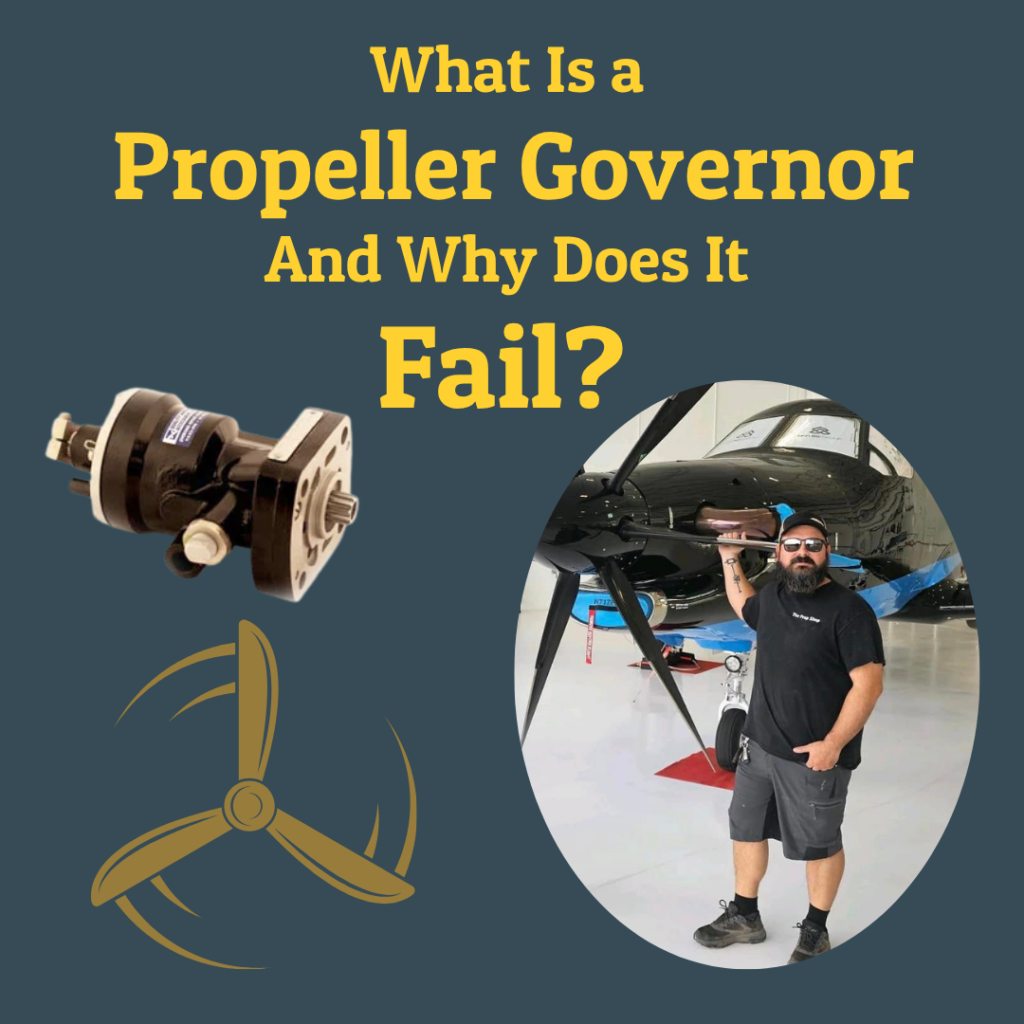
The propeller governor is a precision-engineered control device that automatically adjusts blade pitch to maintain a constant engine RPM. Think of it as your aircraft’s “cruise control” for propeller speed.
Here’s how it works in simple terms:
- Monitors RPM – A flyweight assembly inside the governor senses changes in engine speed.
- Adjusts Oil Pressure – If the engine starts to overspeed or underspeed, the governor modulates high-pressure oil flow to the propeller hub.
- Changes Blade Pitch – By changing the pitch of the blades, the governor restores the selected RPM.
- Keeps RPM Constant – Whether you’re climbing, cruising, or descending, the governor works continuously to keep the prop turning at the RPM you’ve selected via the propeller control lever.
Without a properly functioning governor, your propeller can’t automatically adjust to changing loads—making it difficult or even unsafe to maintain proper engine speed.
Why Is the Propeller Governor So Important?
The propeller governor’s job is critical for performance, safety, and efficiency:
- Performance – Proper RPM control ensures your engine develops the right amount of power for each phase of flight.
- Safety – A failing governor can lead to overspeed or underspeed conditions, increasing risk of engine damage or loss of thrust.
- Fuel Efficiency – Stable RPM helps maintain optimal fuel burn, especially on long legs.
- Pilot Workload – The governor constantly makes fine adjustments so the pilot doesn’t have to.
In short, your governor is one of the hardest-working—but least-noticed—components on the aircraft.
Why Do Propeller Governors Fail?
A propeller governor is a rugged and well-built unit, but it’s not immune to wear, contamination, or mechanical damage. The most common causes of failure we see include:
1. Contaminated Oil
Dirty or degraded engine oil is the #1 culprit in premature governor wear. Oil contamination can come from:
- Metal shavings due to engine wear
- Sludge buildup from infrequent oil changes
- Carbon deposits from combustion byproducts
The governor’s internal components—gears, bearings, flyweights—depend on clean oil for lubrication. Contaminants act like sandpaper, scoring surfaces and wearing out precision-fit parts.
2. Seal and Gasket Degradation
The seals and gaskets that keep oil where it belongs will eventually harden, crack, or shrink. Age, heat cycles, and oil chemistry all play a role.
Once seals fail, internal oil pressure can leak away, reducing the governor’s ability to change blade pitch. External oil leaks are also common warning signs.
3. Improper Rigging
If the propeller control cable or linkage is misadjusted, the governor may not receive the correct control input from the cockpit. This can lead to sluggish RPM response, overspeeding, or inability to reach full RPM.
We often find rigging issues during inspections after customers report “lazy” RPM control or trouble maintaining cruise power.
4. Corrosion
Moisture in the oil system—or simply sitting too long without regular operation—can cause internal corrosion. Corrosion pits can damage bearings, gears, and the governor housing itself.
Aircraft stored in humid or coastal environments are especially susceptible.
5. Neglected Overhaul Intervals
Like propellers, governors have manufacturer-recommended overhaul intervals (typically every 1,500–2,000 hours or every 5–6 years, whichever comes first).
Ignoring these intervals increases the risk of sudden failure. We often find governors that have been in service two or three times longer than recommended, with severe internal wear as a result.
Common Symptoms of a Failing Propeller Governor
The earlier you catch a governor problem, the less expensive—and less disruptive—the repair is likely to be. Here are the red flags to watch for:
- RPM Hunting – Prop speed wanders up and down in steady flight.
- Sluggish Response – Slow RPM changes when moving the prop lever.
- Overspeed / Underspeed – Inability to hold selected RPM under changing loads.
- Oil Leaks – Oil visible on the governor, firewall, or cowl.
- Vibration – Especially if accompanied by irregular RPM changes.
- Hard or Stiff Prop Control Lever – Possible internal or rigging issues.
If you see any of these symptoms, it’s time for a closer inspection before the problem worsens.
How a Governor Overhaul Works
When a governor arrives at our shop, our overhaul process typically includes:
- Complete Disassembly – Every component is inspected and measured against service limits.
- Cleaning – Ultrasonic cleaning removes all oil residue, sludge, and contaminants.
- Non-Destructive Testing (NDT) – Dye penetrant or magnetic particle inspection checks for cracks.
- Replacement of Worn Parts – Gears, bearings, flyweights, seals, and gaskets replaced as needed.
- Reassembly and Calibration – Unit is reassembled to exact manufacturer specifications.
- Functional Testing – Bench testing verifies RPM control and oil pressure output.
By the time it leaves our facility, your governor is functionally “as new” and ready for many more hours of reliable service.
Fleet Operator Considerations: Downtime vs. Cost
For fleet operators, governor repairs are a classic case of pay now or pay more later.
If a single aircraft is grounded for governor issues, the lost revenue from just a few days’ downtime can exceed the overhaul cost. That’s why many of our fleet clients choose to:
- Overhaul governors early during other scheduled maintenance events
- Maintain a spare or exchange unit to minimize AOG time
- Standardize overhaul schedules across their fleet
Just like propeller maintenance, proactive governor planning saves money and keeps more aircraft in service.
Preventing Governor Failure: Best Practices
While no mechanical system lasts forever, you can extend the life of your propeller governor with a few simple habits:
- Follow Oil Change Intervals – Use high-quality oil and change it regularly to keep contaminants at bay.
- Operate Regularly – Frequent operation keeps seals lubricated and prevents internal corrosion.
- Inspect for Leaks – Include the governor in every preflight and oil change inspection.
- Check Rigging – Verify prop control linkage is correctly adjusted during annuals or 100-hour inspections.
- Respect Overhaul Intervals – Treat manufacturer overhaul times as maximum limits, not suggestions.
When to Repair vs. Replace
Not every governor can be saved economically. Replacement may be the smarter choice if:
- The housing is cracked or severely corroded
- Gear teeth are chipped beyond service limits
- Replacement parts are unavailable or prohibitively expensive
- You need the aircraft flying again in hours, not days
In those cases, an exchange program can get you a serviceable unit immediately, with your old governor returned as a core.
Why Work With a Hartzell Recommended Service Facility
When it comes to governors, precision matters. Hartzell’s Recommended Service Facility designation ensures:
- Factory-trained technicians
- Access to OEM parts
- Calibration to factory specifications
- Documentation that satisfies FAA and manufacturer requirements
At Aviation Propellers Inc., we’ve been specializing in propellers and governors for over five decades. Our team understands how these systems work together—and how to get your aircraft back in service quickly when something goes wrong.
Final Thoughts: Knowledge Is Power
The propeller governor may be small compared to your engine or propeller, but its role in safe, efficient flight is huge. By understanding what it does, why it fails, and how to keep it healthy, you can make smarter maintenance decisions and avoid unnecessary downtime.
Whether you’re a fleet operator looking to keep all your aircraft turning revenue, or a private owner who just wants to protect your investment, remember:
- Clean oil is your governor’s best friend
- Overhaul on schedule, not after failure
- Watch for early symptoms and act quickly
- Partner with a trusted shop for expert service and fast turnaround
When your governor is healthy, your propeller is happy—and when your propeller is happy, so is your engine. And that means more hours in the air, fewer hours on the ground, and a safer, smoother flying experience every time.
